Which Fiberglass Is Best for Waterproofing?
Waterproofing failure is one of the most common building problems in roofs, basements, façades, balconies, bathrooms, kitchens, and wet areas. In many cases, the problem is not only the waterproof membrane itself, but also cracking, substrate movement, poor reinforcement, or incorrect installation.
This is why modern waterproofing systems often use fiberglass reinforcement to improve tensile strength, control cracks, distribute stress, and extend service life. Fiberglass is widely used because it offers a strong balance of mechanical performance, chemical stability, dimensional stability, and cost efficiency.
However, not all fiberglass products perform the same way. Polyester fiberglass mat is often the best choice for roofing and large-area waterproofing, alkali-resistant fiberglass mesh is ideal for cement-based wall systems, and chopped strand mat is more suitable for small repairs and complex details.
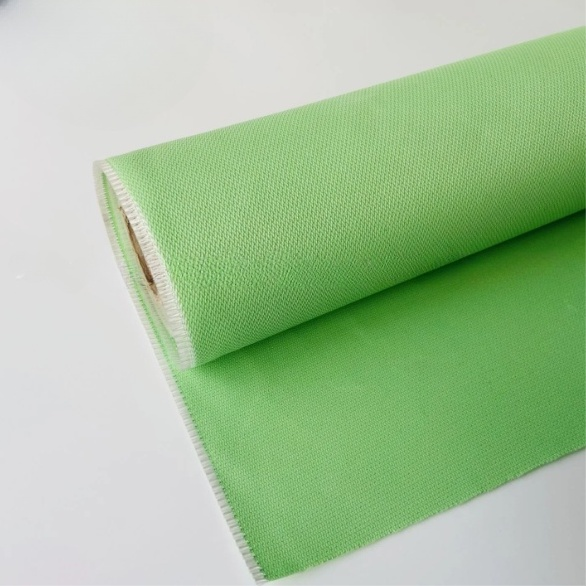
What Is Fiberglass and How Does It Work in Waterproofing?
Fiberglass is an inorganic material made by melting silica-based raw materials and drawing them into fine glass fibers. These fibers can be processed into mats, meshes, fabrics, chopped strands, or composite reinforcement layers.
In waterproofing systems, fiberglass usually does not act as the waterproof barrier itself. Instead, it works as a reinforcement layer inside coatings, membranes, or sheet systems.
Improves tensile strength of the waterproofing layer
Controls cracks caused by thermal movement or substrate settlement
Enhances dimensional stability
Helps bridge small cracks and joints
Extends the lifespan of waterproof membranes and coatings
Fiberglass can be embedded into liquid-applied waterproof coatings, laminated into membranes, used as a carrier layer in roofing sheets, or applied as reinforcement in cementitious waterproofing systems.
Main Types of Fiberglass Used for Waterproofing
Chopped Strand Mat
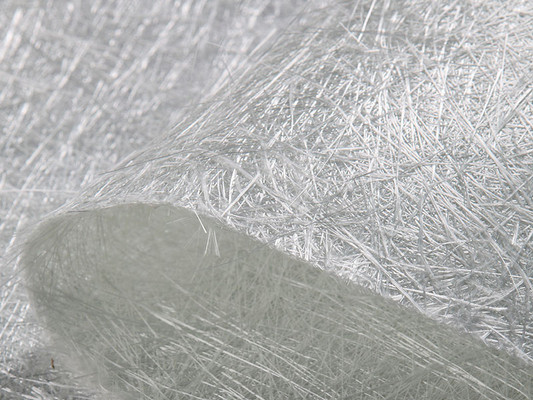
Chopped strand mat, also known as CSM, is made from randomly distributed short fiberglass strands bonded together with a binder. It has good resin absorption and can conform to irregular surfaces.
Key Characteristics
Uniform strength in multiple directions
Excellent resin absorption
Easy to cut and shape
Good for detailed areas and small repairs
Typical Waterproofing Applications
Localized waterproofing repairs
Small-area reinforcement
Corners, details, and irregular surfaces
Composite waterproofing layers with resin systems
Limitations
Lower tensile strength than woven mesh or polyester fiberglass mat
Not ideal for large-span or high-movement structures
May not provide enough elongation for roofs or large slabs
2. Fiberglass Mesh Cloth
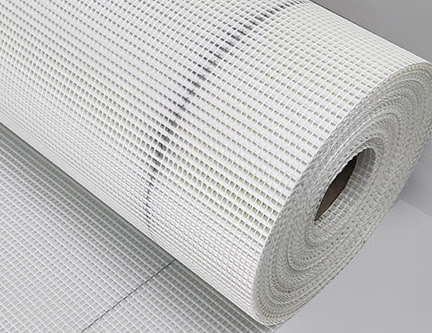
Fiberglass mesh cloth is made from woven fiberglass yarns arranged in a grid structure. For waterproofing and wall systems, alkali-resistant fiberglass mesh is often preferred because it can better withstand cement-based environments.
Key Characteristics
High tensile strength in warp and weft directions
Excellent crack control performance
Good dimensional stability
Good compatibility with cement-based and polymer waterproof coatings
Typical Waterproofing Applications
Wall waterproofing systems
External insulation finishing systems
Cement-based waterproof coatings
Liquid-applied waterproof coatings
Bathroom, kitchen, and balcony waterproofing
Limitations
Limited elongation compared with polyester fiberglass mat
Requires correct embedding technique
Standard mesh may degrade in cement systems if not alkali-resistant
3. Polyester Fiberglass Mat
Polyester fiberglass mat combines fiberglass reinforcement with polyester fibers. It provides a strong balance of tensile strength, flexibility, elongation, tear resistance, and fatigue resistance.
Key Characteristics
High tensile strength
Better elongation than pure fiberglass structures
Excellent fatigue resistance
Good tear resistance
Suitable for structures exposed to thermal movement
Typical Waterproofing Applications
Roofing membranes
Large-area waterproofing systems
Basement and foundation waterproofing
Structures exposed to expansion, contraction, vibration, or settlement
For most large-scale waterproofing projects, polyester fiberglass mat provides the best balance between strength and flexibility. This makes it a preferred reinforcement material for roofing and structural waterproofing systems.
4. Roofing Fiberglass Mat
Roofing fiberglass mat is an engineered fiberglass mat designed as a reinforcement carrier for asphalt, bitumen, SBS, APP, and modified bitumen waterproofing membranes.
Key Characteristics
Good dimensional stability
Heat resistance during membrane production and installation
Consistent thickness and weight
Good compatibility with bitumen-based systems
Typical Waterproofing Applications
Asphalt-based roofing membranes
SBS modified bitumen membranes
APP modified bitumen membranes
Commercial and industrial roofing systems
Key Performance Factors When Choosing Fiberglass for Waterproofing
Tensile Strength and Crack Resistance
Tensile strength determines how much stress the reinforcement can absorb before failure. In waterproofing systems, higher tensile strength helps resist substrate movement, bridge small cracks, and prevent micro-cracks from spreading.
Woven fiberglass mesh performs well in crack control.
Polyester fiberglass mat performs well in large-area waterproofing.
Chopped strand mat is better for details and repairs than high-movement areas.
Elongation and Flexibility
Waterproofing systems must handle thermal expansion, structural settlement, vibration, and dynamic loads. Materials with low elongation may crack even when their tensile strength is high.
Polyester fiberglass mat provides better elongation than pure fiberglass mesh, making it more suitable for roofs, large slabs, and moving structures.
Chemical and Alkali Resistance
In cement-based waterproofing systems, fiberglass may be exposed to alkaline environments. Untreated fiberglass can gradually lose strength. Alkali-resistant fiberglass mesh is recommended for cementitious systems and concrete substrates.
Cement-based waterproof coatings
External wall insulation systems
Concrete substrate reinforcement
Façade waterproofing systems
Adhesion and Compatibility
Fiberglass must bond effectively with the surrounding waterproofing material. Compatibility depends on the coating or membrane type, fabric structure, surface treatment, and installation method.
Acrylic waterproof coatings
Polyurethane waterproof coatings
Cement-based waterproof slurries
Bitumen and modified bitumen membranes
Liquid-applied waterproofing membranes
Durability Under UV and Environmental Exposure
Outdoor waterproofing systems are exposed to UV radiation, moisture cycles, heat, cold, and mechanical stress. High-quality fiberglass reinforcement helps maintain dimensional stability and reduce cracking over time.
Best Fiberglass Choices by Waterproofing Application
Roof Waterproofing
Recommended material: Polyester fiberglass mat or roofing fiberglass mat.
Reason: These materials provide high strength, good dimensional stability, improved elongation, and better long-term durability under thermal cycling.
Wall and Façade Waterproofing
Recommended material: Alkali-resistant fiberglass mesh.
Reason: It provides strong crack control and is compatible with cement-based wall waterproofing systems.
Basement and Foundation Waterproofing
Recommended material: Polyester fiberglass mat combined with liquid-applied waterproof membranes.
Reason: It handles structural movement, moisture exposure, and stress distribution better than low-density reinforcement materials.
Bathrooms, Kitchens, and Balconies
Recommended material: Fiberglass mesh embedded in polymer waterproof coatings.
Reason: It is easy to install, provides strong crack prevention, and works well with thin liquid-applied waterproofing layers.
Fiberglass vs Other Waterproofing Reinforcement Materials
| Material | Strength | Flexibility | Corrosion Resistance | Typical Use |
| Fiberglass | High | Medium | Excellent | General waterproofing, wall systems, coatings |
| Polyester Fiber | Medium | High | Excellent | Flexible membranes and high-movement areas |
| Steel Mesh | Very High | Low | Poor | Structural reinforcement, not ideal for waterproofing layers |
| Non-woven Fabric | Low | Medium | Good | Light-duty waterproofing and temporary reinforcement |
Fiberglass remains one of the most balanced and cost-effective reinforcement options for waterproofing systems because it provides strength, dimensional stability, chemical resistance, and broad compatibility with coatings and membranes.
Installation Best Practices for Fiberglass-Reinforced Waterproofing
Surface Preparation
Ensure the substrate is clean, dry, and structurally sound.
Remove dust, oil, loose particles, and weak surface layers.
Repair large cracks, holes, and voids before applying waterproofing.
Apply primer when recommended by the waterproofing system supplier.
Embedding Technique
Apply the first layer of waterproofing material evenly.
Embed fiberglass while the base layer is still wet.
Press gently to eliminate air pockets, wrinkles, and dry areas.
Ensure full saturation of fibers or mesh.
Apply the top layer according to system requirements.
Overlap and Joint Reinforcement
Maintain overlap according to system requirements, commonly around 50–100 mm.
Add extra reinforcement at corners, joints, drains, pipes, and penetrations.
Avoid cutting mesh or mat directly at high-stress points.
Use additional layers where movement or leakage risk is high.
Curing and Protection
Allow sufficient curing time before exposure to water or foot traffic.
Protect newly installed waterproofing systems from mechanical damage.
Follow the coating or membrane supplier’s temperature and humidity requirements.
Common Mistakes to Avoid
Using low-density fiberglass in high-movement areas
Using standard fiberglass mesh in cement-based systems without alkali resistance
Choosing material based only on thickness or GSM
Insufficient coating thickness over the fiberglass layer
Poor overlap at joints, drains, corners, and penetrations
Leaving air pockets, wrinkles, or dry spots during embedding
Engineering Standards and Testing for Fiberglass Waterproofing Materials
Professional waterproofing systems rely on material testing to evaluate fiberglass performance. Although end users may not always reference standards directly, these tests help define reinforcement reliability.
Tensile Strength and Elongation Testing
Tensile testing measures ultimate tensile strength, elongation at break, load distribution behavior, and whether a fiberglass reinforcement is suitable for high-movement structures such as roofs and suspended slabs.
Alkali Resistance Evaluation
Alkali resistance testing simulates long-term exposure to alkaline cement-based environments. Alkali-resistant fiberglass mesh should retain structural integrity and tensile strength after exposure.
Dimensional Stability and Heat Resistance
Fiberglass used in roofing membranes must maintain dimensional stability under heat exposure. Excessive shrinkage or expansion can compromise membrane continuity and waterproofing performance.
Failure Scenarios vs Correct Fiberglass Selection
Roof Waterproofing Cracks After Two Years
Wrong choice: Low-density fiberglass mesh with insufficient elongation.
Result: Thermal expansion caused membrane cracking along structural joints.
Correct solution: Polyester fiberglass mat with higher elongation and fatigue resistance.
Wall Waterproofing Delamination
Wrong choice: Untreated fiberglass mesh embedded in cementitious coating.
Result: Alkali exposure reduced fiber strength and contributed to debonding.
Correct solution: Alkali-resistant fiberglass mesh designed for cement-based systems.
Basement Leakage Under Hydrostatic Pressure
Wrong choice: Chopped strand mat used over large areas.
Result: Insufficient tensile strength caused localized rupture.
Correct solution: Polyester fiberglass mat combined with a liquid-applied waterproof membrane.
Practical Procurement Checklist for Fiberglass Waterproofing
Key Specifications to Confirm
Areal weight or GSM
Tensile strength in both directions
Elongation at break
Alkali resistance treatment
Mesh size or mat structure
Compatibility with waterproofing membrane type
Dimensional stability under heat and moisture exposure
Roll width, length, packaging, and project installation requirements
Common Selection Mistakes
Selecting thickness instead of mechanical performance
Ignoring substrate movement characteristics
Using general-purpose fiberglass in cementitious systems
Ignoring compatibility with the waterproofing coating or membrane
Manufacturing Quality and Why Factory Capability Matters
In high-performance waterproofing systems, fiberglass quality depends not only on material composition but also on manufacturing control.
Key Manufacturing Factors
Consistent yarn quality
Stable weaving or mat-forming precision
Controlled coating or surface treatment
Stable GSM tolerance
Dimensional accuracy
Batch-to-batch consistency
Manufacturers with integrated weaving, coating, finishing, and quality inspection processes are better positioned to deliver application-specific fiberglass reinforcement for large-scale and customized waterproofing projects.
Future Trends in Fiberglass Waterproofing Materials
Hybrid reinforcement structures: More systems combine fiberglass with polyester fibers to improve both strength and elongation.
Improved alkali-resistant coatings: Better surface treatment helps fiberglass mesh last longer in cement-based systems.
Higher dimensional stability: Roofing membranes increasingly require reinforcement with better heat and shrinkage control.
Application-specific reinforcement: Waterproofing suppliers are moving toward tailored fiberglass materials for roofs, walls, basements, balconies, and wet areas.
Frequently Asked Questions About Fiberglass for Waterproofing
Is fiberglass itself waterproof?
No. Fiberglass is not the waterproof barrier itself. It is a reinforcement material that improves the strength, crack resistance, and durability of waterproofing membranes and coatings. Waterproofing performance depends on the coating or membrane used with the fiberglass.
Which fiberglass is best for roof waterproofing?
For most roof waterproofing applications, polyester fiberglass mat or dedicated roofing fiberglass mat is the best choice because it provides higher tensile strength, better elongation, dimensional stability, and long-term resistance to thermal movement.
Can fiberglass mesh be used with cement-based waterproof coatings?
Yes, but alkali-resistant fiberglass mesh should be used. Standard fiberglass mesh may degrade over time in alkaline cement environments, reducing reinforcement performance.
Is higher GSM fiberglass always better for waterproofing?
Not always. Higher GSM can increase strength, but flexibility, elongation, compatibility, alkali resistance, and installation performance are equally important. Selecting fiberglass based only on thickness or weight can lead to poor results.
What is the difference between fiberglass mesh and polyester fiberglass mat?
Fiberglass mesh provides excellent crack control and dimensional stability, especially in wall and coating systems. Polyester fiberglass mat provides better elongation and fatigue resistance, making it more suitable for roofs, large slabs, and high-movement waterproofing areas.
Can fiberglass replace traditional waterproof membranes?
No. Fiberglass cannot replace waterproof membranes. It reinforces the waterproof layer, but a complete waterproofing system still requires a suitable waterproof coating, membrane, or sheet material.
How long does fiberglass-reinforced waterproofing last?
When properly selected and installed, fiberglass-reinforced waterproofing systems can last many years. Service life depends on material quality, substrate condition, coating or membrane type, installation quality, UV exposure, moisture exposure, and maintenance.
What are the most common fiberglass selection mistakes?
Common mistakes include using non-alkali-resistant mesh in cement systems, choosing low-elongation materials for high-movement areas, focusing only on GSM, using insufficient coating thickness, and ignoring the compatibility between fiberglass and the waterproofing material.
Conclusion: Which Fiberglass Is Best for Waterproofing?
There is no single fiberglass product suitable for every waterproofing application. The best choice depends on the substrate, waterproofing system, movement conditions, chemical exposure, and installation environment.
Polyester fiberglass mat is the best choice for roofing and large-area waterproofing.
Alkali-resistant fiberglass mesh is ideal for wall waterproofing, façades, and cement-based systems.
Chopped strand mat is suitable for small repairs, complex shapes, and localized reinforcement.
Roofing fiberglass mat is suitable for bitumen and modified bitumen membrane systems.
By understanding tensile strength, elongation, alkali resistance, dimensional stability, adhesion, and application requirements, engineers and contractors can select the right fiberglass reinforcement and significantly improve waterproofing reliability.

 English
 العربية
 Français
 Русский
 Español
 Português
 Deutsch
 italiano
 日本語
日本語 한국어
한국어 Nederlands
 Tiếng Việt
 ไทย
ไทย Polski
 Türkçe
 Bahasa Melayu
 Filipino
 Bahasa Indonesia
 magyar
 Română
 Čeština
 қазақ
қазақ Српски
 हिन्दी
 فارسی
فارسی Kiswahili
 Slovenčina
 Slovenščina
 Norsk
Norsk Svenska
 українська
 Ελληνικά
 Suomi
Suomi Հայերեն
 עברית
עברית Latine
 Dansk
Dansk اردو
اردو Shqip
Shqip বাংলা
বাংলা Hrvatski
 Afrikaans
 Eesti keel
 සිංහල
සිංහල Oʻzbekcha
 latviešu
 Azərbaycan dili
 Беларуская мова
 Български
 Lietuvių
 Македонски


